Under Tension
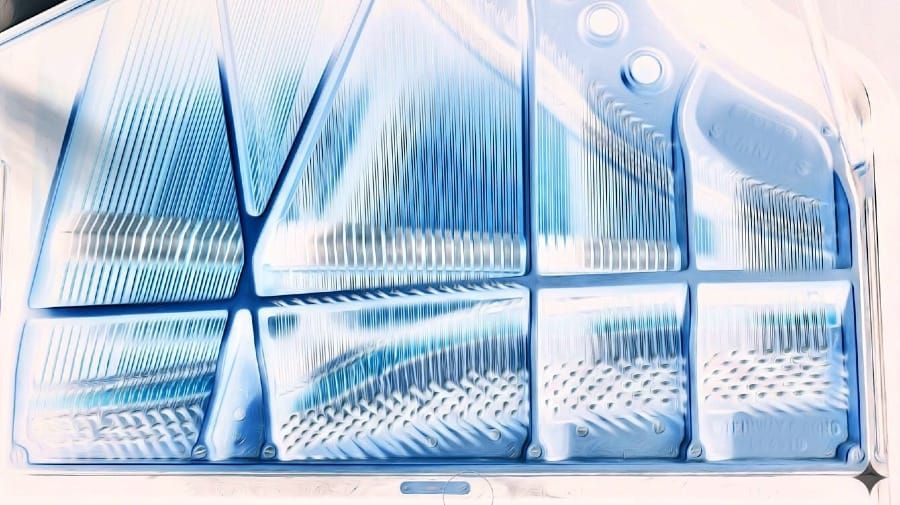
The crafting of a human life is like the crafting of a piano. It’s about what pressure, time, and precisely applied force can make of raw material.
A new Steinway concert grand piano takes up to a year to handcraft and can sell for somewhere north of R4 million. It contains roughly 12,000 moving parts. Craftsmen bend its rim by layering twenty strips of hard rock maple, coating them in glue, and manhandling the whole unwieldy stack into a giant press before the adhesive sets. It’s a choreographed sprint where a single moment of uneven pressure means scrapping months of work. The finished rim then sits clamped in a climate-controlled room for up to a year, apparently doing nothing. If it were released too early, it would try to spring back into a straight line and tear itself apart.
All of this effort, expense, and suspended time for an instrument that hasn't yet made a single sound.
Much of life unfolds in the same way. There are stretches where we seem to be standing still, when nothing obvious is improving and no dramatic breakthrough arrives. We assume that because nothing is visible, nothing is happening.
The String That Won't Sing Slack
The piano has between 220 and 240 strings, each stretched to somewhere between 160 and 200 pounds of individual tension. Add them together, and the cast-iron plate holding them bears up to 30 tons of continuous force — roughly the weight of four bull elephants, applied without ceasing, for the lifetime of the instrument. The frame exists for one reason: to hold that tension without collapsing.
No string makes music when it's slack. Pluck a loose wire and you get a thud, a dull nothing. The string must be under tension to sing. Not just any tension but precisely calibrated tension, different for each string depending on its position, thickness, and the note it's meant to produce. The treble strings are thin and pulled ferociously tight; the bass strings are thicker and wrapped in copper, their mass doing the work their tension can't. Each one is individual, each under its own specific load, each producing exactly the required tone.
The Greek word for tone is tonos. It means, literally, a stretching. A taut string. Tone is tension. There is no music without it.
The Hammer That Completes the Circuit
The part that tends to get overlooked in the piano's engineering, and in the way we think about adversity, is the hammer. It doesn't damage the string. It needs the string. Without a taut string to strike, the hammer produces nothing. It just swings through air. And without the hammer, the perfectly tuned string sits mute in its frame, tension and potential and no sound at all.
The hammer is made by wrapping compressed wool felt around a wooden core under intense industrial pressure, then needling and filing the finished product by hand until a technician is satisfied with the tone it draws out. Too hard and the sound goes tinny; too soft and it goes dull. The hammer has to be exactly the right kind of tough: resistant enough to strike, yielding enough to resonate.
Human character develops much the same way. People often imagine resilience as hardness, but hardness alone is brittle. The strongest individuals are rarely those who feel nothing. More often, they are those who remain responsive despite what they have endured.
Steinway's engineers describe the ideal result as a hammer with "greater stability and a cleaner, singing tone." The singing isn't despite the compression, but because of it.
What the Wood Learned to Hold
Consider the rim again. Before a single string is strung, before a single key is pressed, the piano's outer structure spends months doing nothing visible while everything essential happens. The wood fibres, bent violently against their nature, are slowly accepting a new shape as permanent. They are being taught that the curve is not an infliction. It is what they are now.
This is what the instrument-makers call settling. It cannot be rushed. A piano finished before its wood has settled will, under the tensions it was built to bear, pull itself apart.
The same is true of every piece of the instrument. The soundboard is arched under deliberate stress because a flat board pushed flat produces less sound. The iron plate is bolted beneath the load. The key action's 12,000 components are regulated and balanced by hand, often to tolerances of five-hundredths of a millimetre, because any slack in the mechanism produces a dead key, a note that doesn't speak when struck.
Precision tolerances exist in order to preserve responsiveness under pressure. The tighter the fit, the more faithfully the system transmits force into sound.
The Pianist Arrives
There is one final element in the story. A magnificent piano can spend decades in silence if nobody sits at the keyboard. All the craftsmanship, all the tension, all the seasoning and tuning and careful regulation exist only as potential until someone engages with the instrument.
The same may be true of us. Life's difficulties shape us, but they do not automatically produce meaning. Meaning emerges when we use what those difficulties have made possible. Wisdom unused remains silent. Strength unused remains theoretical. Compassion unexpressed remains invisible. Music without participation is mere potential.
The Necessity of the Press
Music is not produced in spite of the heating, the bending, the compression, the decades-long tension on the frame. Music is the result of all of it. Removing the pressure won't give you a more comfortable piano. You won't have a piano, only expensive wood.
Life, as a premise, works identically. The parts of a person — whatever those are, the parts you'd name if you were honest — are not formed in ease. They are seasoned and bent under pressure and left to cure. Struck repeatedly by hammers until the tone emerges. The image of adversity as being an attack misses something important: the hammer and the string are not adversaries. They are collaborators in the only process that produces music. A life without tension produces no tone.
On the Word Beautiful
The reason people call a mathematical proof beautiful, or a legal argument beautiful, or a selfless act beautiful is because of precision. The word carries a history. The ancient Greek concept of kalokagathia fused the words for beautiful and good into a single idea: that which achieves excellence, that which functions with structural perfection, is beautiful. Not by analogy but by definition.
A piano that has been properly seasoned, bent, voiced, and tuned — one whose rim has settled and whose strings are at exactly the tension they were designed to hold — is beautiful in both senses at once. It looks like what it is. And what it is, is something that took immense force to become.
Perhaps this is why we admire certain people without always knowing why. We encounter individuals who carry themselves with a kind of quiet solidity. They are neither hard nor soft, neither arrogant nor fragile. They seem capable of absorbing difficulty without surrendering their humanity.
Like the finest instruments, they have been shaped by forces we cannot immediately see. This might be the truest thing the piano has to say. Not that the pressure was worth it, which implies the pressure was the cost. But that the pressure was the method.
The point was never to survive the building. The point was always to sing.
Thank you for reading. You can support me in one of the ways listed further below.
Read Further:
The weight of waiting – On how patience forges resilience
Life as a potato salad - On choosing the harder, stranger, and occasionally “wrong” way through life
You can support me in one of the following ways listed further below.
Share this post [ https://www.despitethehammers.com/ ] to your social media followers.
Subscribe to the free email newsletter, which allows you to comment on the post. Click the blue button on the top or bottom right of the screen.
Join the Despite the Hammers Channel on WhatsApp to receive notifications of new posts.
Follow my thinking on BlueSky.
Donate any amount via PayPal or directly into my bank.
Member discussion