
Where You Are is Not Necessarily Your Place
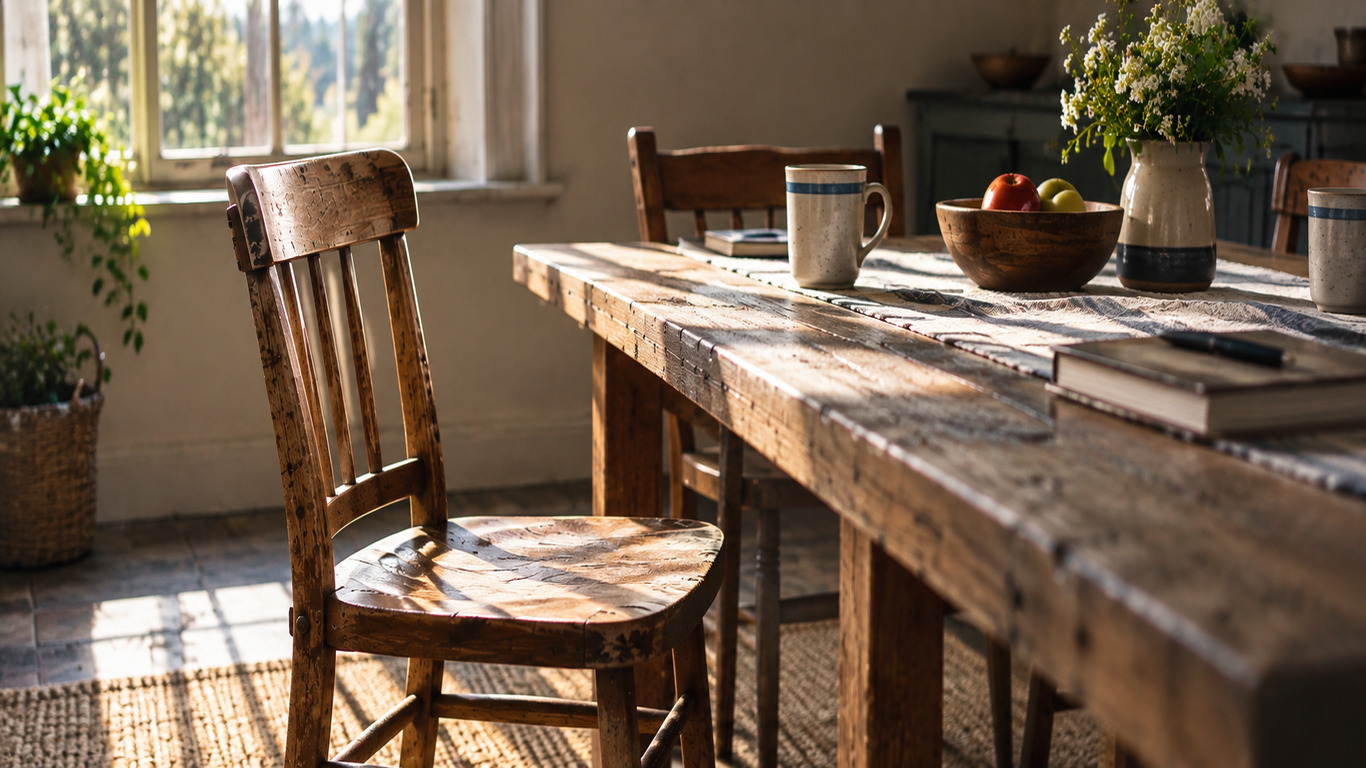
Place is more than a point on a map. It is where you stand, what you do, whom you affect, and whether you can live as yourself.
We have become remarkably dependent on being told where we are. Our phones can pinpoint our position to within a few metres and tell us how to get almost anywhere: turn left, continue for five hundred metres, take the next exit. We rarely need to know where we stand in relation to anything else; the blue dot supplies our position, and the instructions tell us what to do next. Yet knowing exactly where you are does not tell you whether you are in the right place. That takes a different kind of navigation, one no satellite can perform for you.
There is a useful distinction between position and place. Position describes where something sits in relation to other things: a precise point, a fixed coordinate. Place is broader. It's somewhere we occupy, visit, inhabit, or make meaningful through what happens there. A chair is a place to sit; a house, a place to live; a neighbourhood, a place to belong; an office, a place to work. We use the word differently again when we ask, “What is my place in the world?” Here we leave geography behind for something more fundamental such as where we fit, where we can stand, and what we are here to do.
I've felt the difference. I once lived somewhere pleasant enough. It was a decent house, agreeable neighbours, nothing obviously wrong with the area or the people in it and still counted down the months until I could leave. Looking back, I was not rejecting the buildings, the landscape, or the people. Something about being there kept me from becoming, or doing, what I needed to become or do. The place was not bad. It was simply not mine.
We make the same mistake elsewhere in our lives. We can have a perfectly respectable job, agreeable colleagues, pleasant clients, and work that is reasonably rewarding, yet we would never want to spend the rest of our working lives there. One stays because leaving would be disruptive, and sometimes that is the right call. But often “good enough” becomes simply the place we have grown accustomed to occupying, whether or not it is the place we belong.
Knowing that you are in the wrong place does not tell you where the right one is, and leaving is rarely as simple as deciding to go. Money, responsibilities, relationships, geography, contracts, age, opportunity, and plain exhaustion can turn “just move” into something far more complicated than the advice implies. Some places must be inhabited for a while before we can move on while some circumstances require us to start building our place before we can find another one.
Having a place in life is not something someone else hands to you. There is a temptation to wait for the right opportunity, the right relationship, the right amount of confidence, or some future version of ourselves before we begin living properly. We call this patience or realism. Often, what we are really doing is waiting to be rescued. The world, however, does not wait for us to feel ready before it tests us. Every day spent waiting to change your life is a day spent not claiming it as your own.
Taking your place is not a grand declaration of purpose; it is ordinary. It's simply noticing where your feet already are and asking what you can do from there: your home, your family, your desk, your workshop, your street, the people you deal with every day.
From that ordinary ground, influence spreads outward. Close to you are the people and circumstances that you deal with directly like neighbours, colleagues, clients, friends, relatives, local businesses, clubs, and schools. Further out are wider concerns that you cannot control but have reason to notice because your interests or responsibilities reach into them. Picture it as a series of overlapping circles. The closer one is to where you stand, the more directly you can act within it. The further out you are, the more your role becomes one of attention, participation, or influence. Contentment in that inner circle is usually a sign that you are where you need to be.
Further, none of us occupies a place alone. A person secure in their own place is better able to take part in the places surrounding them. Neighbourhoods are shaped by planners, architects, developers, or local authorities. Yet the people who walk their streets, use their shops, keep up their houses, greet one another, start businesses, and decide that something matters enough to fix, are the ones giving it life and meaning. The same is true of an office: physically it is desks, screens, meeting rooms, and a coffee machine, but its genuine character comes from the relationships and habits that grow inside it. A sports club, a church, a community group, and a family all work the same way. The setting is physical, but the meaning is made by the people in it.
This gives us both a responsibility and a source of security. Wherever we stand, we send out ripples like a stone dropped into a pond disturbs water well beyond where it lands. We can make a colleague’s day easier or harder, a neighbour feel welcome or invisible, a community stronger or a little more abandoned. None of this requires being a place’s leader, owner, or expert as most places depend on people who are none of those things.
There is something reassuring in this. You do not need to command the whole pond to matter within it, only to know where you are standing and what lies within your reach. Security comes less from having influence everywhere, than from knowing the ground you can act on and using it.
However, an important qualification is that sometimes the place we are in does not allow us to become more fully ourselves. We can participate, contribute, adapt, make the best of things, and still carry a persistent sense of being misplaced. That feeling should not be dismissed as ingratitude or restlessness. Sometimes it is information that can be as unwelcome and as accurate as any other blow that life delivers.
The challenge is distinguishing a place that asks us to participate and grow from one that steadily diminishes or constrains us. No place accommodates everything we want. Every community, workplace, family, and neighbourhood involves compromise. Consider whether those compromises are compatible with the person we are becoming. When they are not, we may eventually need to move.
Leaving, done well, can be exactly how we make room for belonging elsewhere. A temporary place can sustain us while we prepare for another; a job can finance the move towards different work; an unfamiliar neighbourhood can become home slowly, over years rather than weeks. Recognising what a place is doing in our lives and deciding what to do in response, matters more than pretending that every place must become permanent.
Finding your place, then, is not merely discovering one perfect location but also about learning to inhabit a life. It entails being reasonably at ease with whom you are now rather than postponing living until you become someone else; acting instead of waiting for circumstances to arrange themselves; contributing to what is immediately around you while staying aware of the wider world beyond your reach – and, when a place persistently blocks this, having the courage to look elsewhere.
However, knowing your place does not make you immune to the hammers of life. Loss, betrayal, illness, failure, disappointment, injustice, and plain bad luck can swing at us wherever we happen to be standing. Nor does it stop us from becoming hammers ourselves as we hurt people through carelessness, impatience, anger, or simply by failing to notice what our actions do to them. But having a place, knowing who you are, where you stand, what you can influence, and where you belong, gives you something to stand on when the hammer falls. It also improves your odds of noticing when your own hammer is swinging towards someone else.
There is strength in taking your place. You do not need to stand at the centre of everything, control what happens around you, or build a life immune to harm. You need only somewhere to act from. A secure place gives you footing when circumstances turn uncertain, perspective when other people’s hammers are swinging, and enough steadiness to repair what you can when your own actions have caused damage. The hammers will keep swinging. The point is not to stop them, but to know where you are standing when they do.
We are all, in some sense, blue dots on somebody’s map. But a blue dot is only a position. A place begins when we inhabit it, give something to it, take something from it, and become part of what happens there. Know where your feet are. Know what lies within reach. Take your place there, and if it turns out not to be yours, do not spend your life waiting for someone else to move you. Find somewhere you can stand, act, belong, and leave a mark, because the hammers of life will swing wherever you are standing. It helps to have solid ground beneath your feet when they do.