It's Not About Heroes
You don’t have to conquer life. You only have to keep participating in your own story.
Some people seem to move through life with a good set of tools. They learn easily, find work, make connections, acquire useful skills, solve problems, or change direction when necessary. Along the way they accumulate things that make the next difficulty easier to handle such as experience, money, confidence, qualifications, and contacts. Then there are people who don’t.
This is not because they are lazy or because they made terrible choices. Sometimes the world simply demands things from them that they don’t have. They struggle at school, struggle to find work or repeatedly fail in things that other people manage to do easily. Eventually some stop trying, and I wonder what it would feel like to watch the rest of the world moving forward while one remains where you are. This bothers me because our stories seldom include the person who is standing still.
Our stories prefer winners. Even stories about adversity tend to be about exceptional people. Someone loses everything, starts again, and builds a successful business; someone survives terrible hardship and becomes an activist; or someone fails repeatedly before eventually succeeding. These stories can be inspiring, but they establish another measuring stick. What about the person who gets hammered by life and never becomes inspiring?
One of the cruellest things we do is measure people against one another. Someone will always be stronger, smarter, better educated, more employable or more resilient. The modern world also gives us endless opportunities to discover exactly how far behind we are, because other people’s achievements arrive continuously through a screen. Against that background, even words such as resilience, agency and growth can become another form of competition.
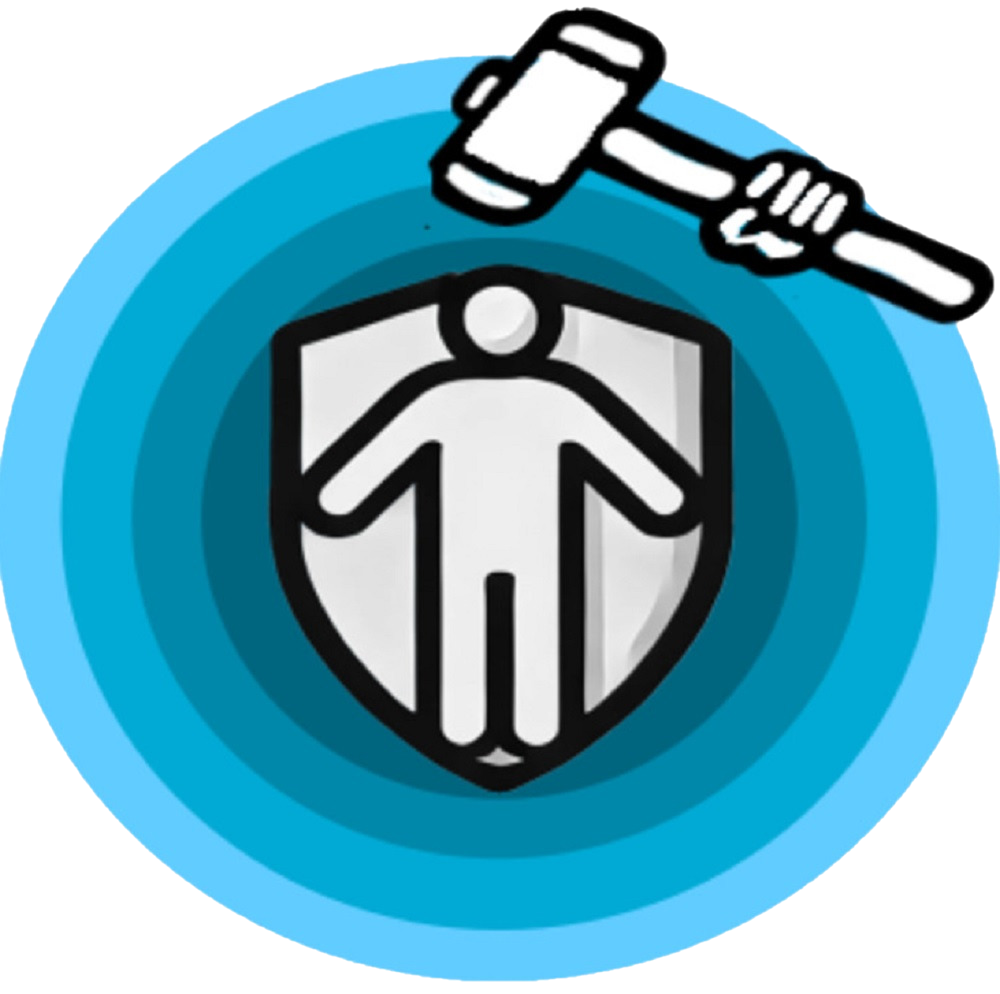
Did you overcome your adversity, learn from it, and emerge stronger? Excellent. Here is your medal. But life isn’t a school examination, and we shouldn’t turn adversity into one either. My blog has never been about becoming a hero; the hammer in my logo isn’t striking Superman, but an ordinary human being. It’s the ordinary we need to look at more closely.
There are wars, food becomes more expensive, climate change alters livelihoods, and crime frightens communities. These are enormous hammers, and most of us cannot do much about them. Yet each of us also inhabits a much smaller world. We have bills to pay, relationships go wrong, job applications fails, the thing we tried didn’t work, or we make mistakes. Those are hammers too, and dealing with them could build something that helps absorb the force of the larger blows.
An oyster offers an interesting picture of this. The familiar story is that a grain of sand gets inside the shell and eventually becomes a pearl. The biological details are more complicated, but what interests me is the principle. Something unwanted intrudes and the oyster responds by depositing layer after layer around it. The oyster does not defeat the intrusion or eject it triumphantly into the sea. It builds around what happened.
Traditionally, pearls have been associated with wisdom, but I think we should be careful with that part of the analogy. Not every painful experience produces wisdom. Suffering does not automatically improve us, and some hammers simply hurt. Nor does everybody have the ability or the inclination to analyse what happened, extract a lesson and announce how much they have grown. Perhaps conscious understanding is not always necessary for an experience to leave a useful layer behind.
We know things because we have lived through them. We know that a particular disappointment did not destroy us, although at the time we thought it might. Sometimes we understand what we learnt, but sometimes the learning is less obvious, buried in how we respond the next time something goes wrong. Either way, the person receiving the next blow is no longer the person who received the previous one. Something has been added.
This brings me to an idea I came across while gathering thoughts for this post. Making contact with reality. The person describing it had realised that some of the best things in his life had not resulted from figuring everything out beforehand. They had come from doing things, trying things, and seeing what happened. He compared his earlier approach to holding a seed trying to determine exactly what it would become without planting and watering it.
You don’t have to wonder what it will become or even whether it will grow. Plant it instead of speculating about it. Make contact with the reality of soil, water, weather and whatever happens next. There is an enormous difference between thinking something won’t work, and something didn’t work. The first is a prediction about what reality will be; the latter is something reality has taught you. That small distinction changes what failure can mean.
That it didn’t work — failure —becomes information and not a verdict on the one who failed. Trying something and discovering that it does or doesn’t work, does not make you clever or heroic, but it does change the situation.Yesterday you did not know. Today you know one thing more, and sometimes one thing more is enough to make another step possible.
We often describe life as a journey, but I’m no longer sure I like that metaphor. A journey suggests a destination, a route, a plan or even a map. Life looks much messier from inside it. Life is better understood as a series of steps such as decisions made with incomplete information, wrong turns, periods of standing still, or encounters with things we could not have imagined before we reached them. The person who appears to be standing still may simply have a very different next step from mine.
That step does not have to produce a career, qualification, business, or triumphant story that somebody will one day tell in a book or epic poem. It may be learning something, helping somebody, asking a question, making something, trying again, or planting the proverbial seed. For another person it may simply be enduring today without surrendering tomorrow. Living belongs to the life being lived, not to the onlooker measuring it.
This brings me back to the circles in the Despite the Hammers logo. I’ve come to think of those inner layers as the personal hammers we have already encountered. We did not necessarily defeat, master, or transform it into inspirational lessons. We encountered it. Something happened and we responded somehow. Maybe we responded well or badly, or managed to endure it without falling apart. Nevertheless, it became part of the person who meets the next hammer.
Layer after layer. Not armour, invulnerability or heroism. More like the oyster responding to what entered its shell, using what it had available and adding something around the intrusion. Eventually there is more between the vulnerable centre and whatever comes from outside. That is why the smaller hammers matter when the larger ones arrive.
So, if you look around and everyone else seems to have travelled further, then distance is the wrong thing to measure. Their capacities are not yours; their circumstances are not yours, and their story is not yours. Your life does not have to become impressive to others before it is worth continuing to live it.
While your story remains unfinished, there is always room for another step.
