Courage Redefined
First published: 15 August 2025. Updated: 6 February 2026
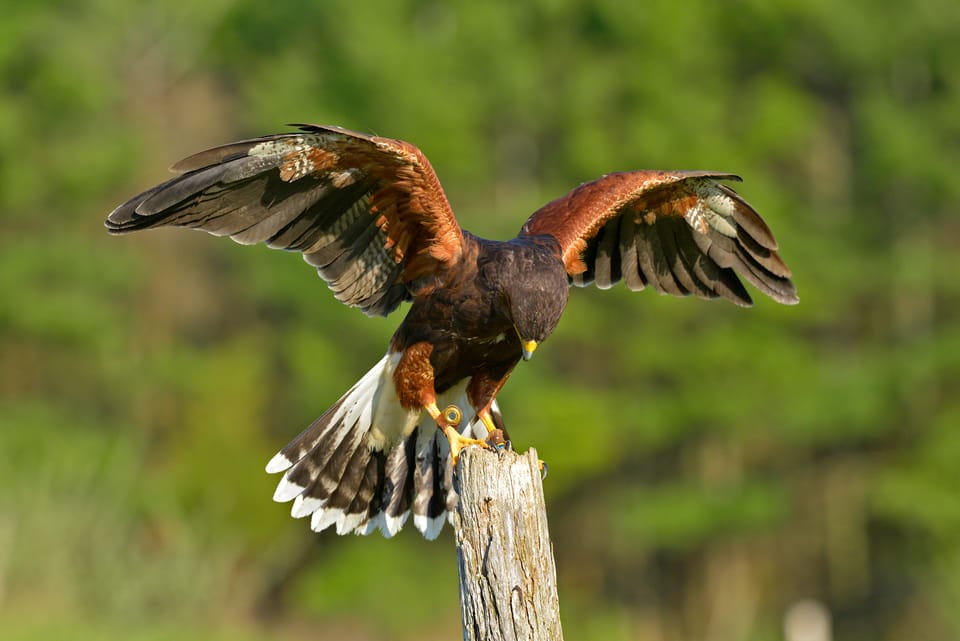
You've watched the hawk circle overhead, riding invisible currents with barely a wing beat. What you don't see is the split-second calculation it makes before landing, not taking the fastest approach, nor the flashiest dive, but the one that gives it the most control. The hawk doesn't think about being brave. It simply chooses not to fall.
We've turned courage into something extraordinary. We’ve made it something reserved for firefighters and soldiers, and for dramatic moments of physical danger. Yet most of our lives demand a different kind of courage: the quiet determination to engage with challenges rather than avoid them. This is everyday courage, and you already possess it. You simply haven't recognised it yet.
A New Definition
Courage /ˈkʌrɪdʒ/ noun
Traditional definition: The ability to do something that frightens one; being brave in the face of danger, pain, or adversity.
Everyday courage: The quiet determination to engage with life's challenges without retreat or avoidance. The willingness to act constructively when faced with difficulty, uncertainty, or discomfort. Not heroic gestures, but the persistent choice to move forward rather than withdraw, to engage rather than avoid, to try rather than surrender to inertia.
Etymology: From Old French corage (heart, innermost feelings), from Latin cor (heart). The heart as the seat of feelings and as the centre of vital energy.
Usage note: Modern understanding recognises that courage manifests not only in extraordinary circumstances but in ordinary moments where we choose engagement over avoidance, fixing what's broken, addressing what's difficult, or simply showing up when it would be easier not to.
The Choice Before the Landing
Sometimes circumstances curtail our choices. But when we can choose, those choices matter. Consider the Harris's hawk. Scientists studying these birds discovered something unexpected. When approaching a perch, hawks don't choose the fastest path or the most energy-efficient route. They consistently choose the approach that gives them the most control over their landing.
Like hawks reading the wind and obstacles, we can learn to read the currents of our daily situations. We can choose the path that gives us control over our landing, not the flashiest trajectory that ends with broken wings. Courage isn't choosing to stand heroically—it's choosing not to fall.
Courage is not choosing to stand heroically but choosing not to fall.
Understanding the Fall
What does falling look like in everyday life? It's the subtle diminishing of self, pulled down by internal insecurities. We take the bait from wellness and beauty industries' profit machines. We follow fashions, fads, fools, and fakes, seeking satisfaction in wealth, fame, and pleasure that provide no lasting fulfilment.
More insidiously, we seek to escape daily realities through diversions or faux spirituality, choosing instant gratification over considered action, not recognising how this falling affects our psyche and those around us.
Cause and Effect
Hawks instinctively understand that their approach affects their survival. We possess something more powerful: our conscious understanding of cause and effect. Unlike a hawk's instinct, we can deliberately control outcomes by understanding how actions influence consequences.
We sort of know this, yet don't always apply it. Whatever we do, produce, or say affects what and how others do, produce, or say. Considering the effect we have is the fulcrum on which a good personal life and society balance.
Considering the effect we have is the fulcrum on which a good personal life and society balance.
Plainly said, applying everyday courage influences whether we and those around us can perch safely or crash and fall. This doesn't produce instant results. Like a hawk learning to find thermals, it takes practice and patience.
Recognising Your Everyday Courage
Just as hawks practise thousands of landings to master their approach, everyday courage requires daily practice. Each small challenge is flight training for bigger ones.
You already possess this courage, though it may not have occurred to you to recognise it. We blindly adhere to 'I can, I must, I will' philosophy with haste and nervousness instead of seeking the quiet determination to simply engage with what's before us.
Like a hawk seeking thermals to lift it higher, we can find our everyday courage through daily small interventions. The alternative? Joining whichever squabbling rabble that the turbulence drives us towards, pulled off course from a safe perch.
Recently, I faced an unwelcomed challenge: changing this blog's domain name from .io to .com. I wrestled through help files from two ISPs and their technical language such as DNS, @, CNAME, records, redirects, pointing to IP, TTL, 4H, A, and errors I couldn't fathom. Even with AI assistance, it took nearly two days of wrestling with a language I didn’t understand. When I succeeded, the sense of accomplishment was enormous. Fists punching the air, I shouted, 'I DID IT! I FRICKEN DID IT!' I saw my everyday courage. It was worth every irritation and annoyance.
What It Looks Like
Practising everyday courage means learning a new skill instead of hiring it out; pressing 'send' on an email that might receive pushback; learning to parallel park in city traffic; asking for help when drowning in tasks; speaking up in a meeting when everyone else nods along; admitting you were wrong in an argument.
None of these require physical bravery, yet each demand that moment of choosing engagement over avoidance, action over inaction.
Why This Matters Now
The traditional courage narrative focuses on dramatic, once-in-a-lifetime moments, whilst most of our lives are built from small, repeated choices. We need a courage framework that matches contemporary existence and honours the accumulated weight of daily decisions.
We're overwhelmed by infinite choices and constant connectivity. Overloaded with options, we freeze or default to avoidance—and we fall. We postpone instead of deciding—and we fall. We consume other people's curated lives instead of engaging with our own messy reality—and we fall.
Practical Steps
Daily, choose something small. The most boring, mundane thing you've been avoiding. Complete it. You'll notice how this helps you do something incrementally bigger each time.
Notice your daily 'thermals'. People, activities, or environments that naturally give you energy and lift you up. Schedule more of these before tackling challenging tasks.
Then choose:
What's the fastest path? (avoidance or quick fixes)
What's the easiest path? (delegation or procrastination)
What's the safest landing path? (the one that gives you the most control over the outcome)
Choose the third option.
The Landing
The hawk doesn't know it's being courageous when choosing the safest landing approach. It simply engages with what's in front of it, using its best judgement to maintain control. Similarly, you don't need to feel brave to exercise everyday courage. You simply need to choose engagement over avoidance, one small decision at a time.
For those battling with extremes, your energy sapped by constant onslaught, your wings of choice clipped: do the tiniest thing you can cope with. Your heart will see the tiniest bit of hope grow. For now, that's all that's needed. That dreadful thing will cease just as flowers cease blooming at the end of the season. No flower blooms all year. Remember this until your right to choose returns, as a hawk returns to its nest.
Thank you for reading. You can support me in one of the following ways:
Subscribe to the free email newsletter, which allows you to comment on the post. Click the blue button on the top or bottom right of the screen.
Join the Despite the Hammers Channel on WhatsApp to receive notifications of new posts.
Share this post [ https://www.despitethehammers.com/ ] to your social media followers.
Follow my thinking on BlueSky.
Donate any amount via PayPal or directly from your bank.
Member discussion